


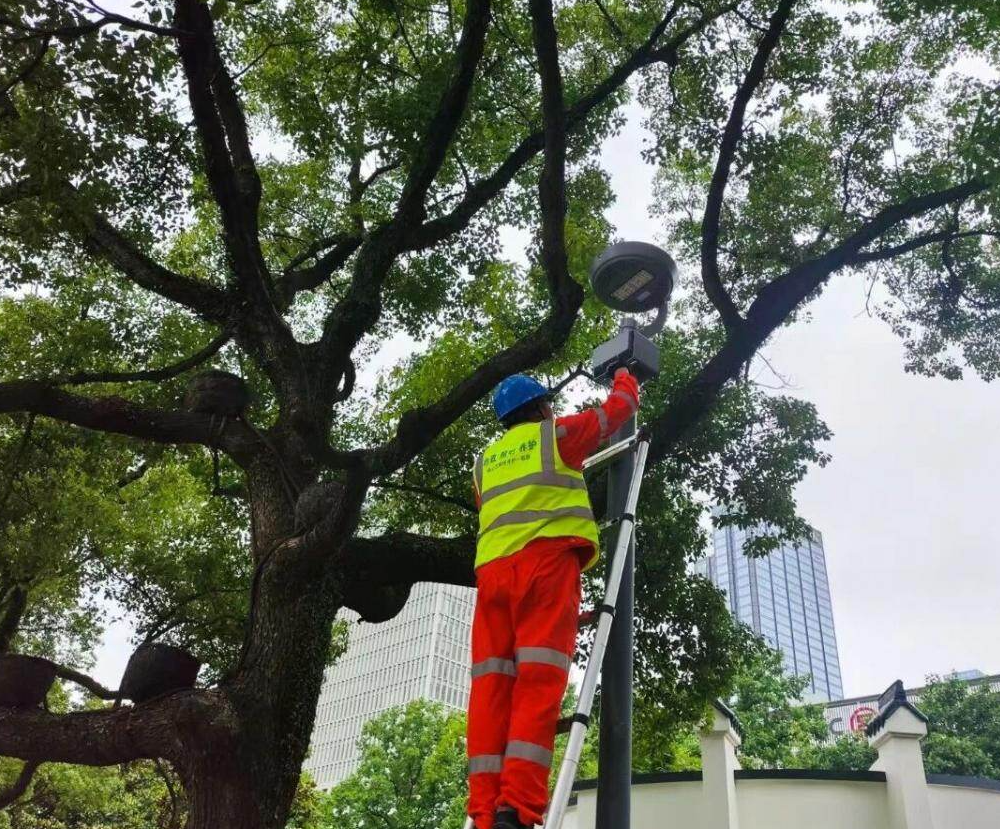
Recently, the Ningbo Municipal Facilities Center completed a pilot project of energy storage lamp holders along riverside areas in Haishu District and Jiangbei District. A total of 29 new-type energy storage lamp holders were installed, covering three key locations including Times Square, Jiangxia Park and Huai Shu Park. Small as the lamp holders are, they embody thoughtful consideration for residents’ daily travel and emergency safety.
Ningbo lies on the southeast coast. During typhoon and flood seasons, heavy rainfall and high tides often cause inundation and power outages of riverside lighting facilities, a long-standing difficulty in flood and typhoon prevention. Instead of merely carrying out emergency repairs, municipal authorities under the housing and urban-rural development department have kept exploring measures for building urban safety resilience and enhancing the emergency support capacity of urban lighting during flood seasons.
The energy storage lamp holders adopted in this pilot integrate high-efficiency LED lighting, energy storage batteries and intelligent control systems. Capable of self-regulating power consumption and coping with emergencies, they can automatically switch power supply modes upon power failure to guarantee uninterrupted basic lighting. This means roads in the core Sanjiangkou area can remain illuminated even under extreme weather conditions, providing reliable lighting for residents’ travel and emergency rescue operations, and effectively strengthening flood prevention safety barriers.
“I used to worry about pitch-dark roads when going out during typhoons. Now these new lamp holders make me feel much safer,” said Aunt Chen, a resident living near Huai Shu Park, voicing the genuine feelings of local residents.
The project person-in-charge stated that the pilot addresses the livelihood pain points exposed by repeated waterlogging incidents in the past, and meets people’s fundamental expectations for safety through technological innovation. It not only makes urban lighting more “resilient”, but also explores a replicable and promotable “Ningbo model” for the renovation of ageing street lamps in the future.


