


Under the trend of automated driving and personalization, the automotive lighting system is also undergoing important changes. It is mainly manifested in two aspects: first, from the initial simple lighting to the main medium used for decoration, implanting brand characteristics, and displaying technical strength and design skills today. Secondly, with the vigorous development of autonomous driving, automotive lighting systems are becoming more and more intelligent. This paper expounds on the types and processes of different types of car light sources, and analyzes their functions in the shape of car lights, pointing out the development direction for the shape of car lights in the future.
I. Introduction
China's auto market is undergoing rounds of reform and transformation, and auto lighting-the configuration originally used for us to explore the road-is quietly undergoing qualitative changes. This is because it is no longer just a lamp. bright light. Now various car companies are playing with car lights. With the evolution of LED, OLED, laser headlights, and other products, the performance of car lights has become more powerful and the size has become smaller, thus gaining more styling possibilities.
2. Types of headlights
From the basic halogen, advanced xenon headlights, to the new force LED, the futuristic laser headlights have their own advantages and disadvantages. How to choose these 4 different headlights depends on the location of the model. Next, let’s take a look separately:
1. Halogen headlights
Halogen headlights began in the 1970s, and this is the most common type of headlight source at present. Halogen lamps are actually an upgraded version of incandescent lamps used in daily life. The application of halogen elements can increase the brightness of incandescent lamps by 1.5 times, while the service life is increased by 2-3 times, it is composed of a light bulb + reflector bowl, and the volume required for the reflector bowl is large, resulting in poor plasticity, but because the price of halogen lamps is cheap, for some economical models with lower prices Still very applicable.
2. Xenon lamp
The xenon lamp breaks the tungsten filament light-emitting principle invented by Edison, and fills the high-pressure inert gas-xenon gas in the quartz lamp tube to replace the traditional filament, and stimulates the xenon gas to emit light through high-voltage current. Compared with halogen lamps, xenon lamps have a higher color temperature. The current mainstream xenon lamps have a color temperature of 4200K-6000K, and the light color is closer to the white light like the sun at noon. It is composed of bulbs + reflective bowls/lenses. Compared with halogen lamps, xenon lamps have the advantages of high brightness and long life, but the cost is relatively high.
3. LED
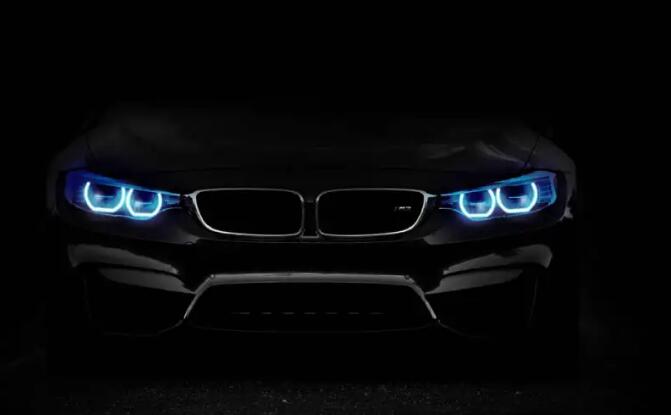
LEDs were first used in automotive interior lighting, and have since expanded to broader applications such as headlights and combination taillights. The most typical application of LEDs in headlights is daytime running lights. Due to the small size of LEDs, it is convenient for free combination and secondary optical design, so LEDs can be used to form different combinations of shapes and lines, with a large modeling space and a sense of technology. powerful.
In addition, compared with traditional light sources, LEDs are also superior in performance:
First: longer life, faster start-up, LED response time can reach ns level, so when the LED is applied to turn signal lights and high-mounted brake lights, it can meet the emergency response requirements during vehicle driving and effectively reduce the risk of car accidents occur.
Second: LED headlights can be anti-glare: the color temperature of the white LED light source is 5500K~6000K, which is closer to natural light (4800K~6000K) than xenon light source (4000K), which has higher comfort and avoids light fatigue of drivers issues have a greater advantage.
Third: energy saving and environmental protection. LED is a cold light source, which converts electrical energy into light energy, so it will not produce pollution or excessive heat during the lighting process.
4. OLED
The emergence of OLED provides a new design solution for automotive lighting systems. OLED is a highly plastic material with rich shapes and has been applied in many concept cars.
OLED has the following two advantages:
First, it has the characteristics of self-illumination, does not require the support of any light source system, and is only 1.4mm thick. Future taillights can even be pasted on the rear of the car like a sticker, without taking up space in the trunk, and have a greater advantage in volume compared with ordinary LED products;
Second, compared with the point light source of LED, OLED has the characteristics of the surface light source and diffuse reflection, uniform light quality, stepless dimming, and no shadow casting. Lighting effects can be uniform, shading, or even dynamic. These two characteristics make OLED very suitable for making interior ambient lights and tail lights.
Its shortcoming is that the service life is short, the material can only withstand the temperature of 80 degrees Celsius, and the price is high, so it has not been widely used in the car lamp market at present. OLED currently cannot reach the same brightness as LED and is generally only used for taillights, signal lights, and interior lighting.
5. Laser headlights
In addition to OLED, laser headlights will also be one of the future development trends of car lights. Compared with LED headlights, laser headlights have more advantages in technology: their smaller size, brighter lighting, and lower heat generation allow designers to redesign the car body and leave more space The layout of the aerodynamics, as well as the appropriate adjustments to the front suspension and engine position, in order to achieve the purpose of optimizing the space.
The illumination of laser lights is 1000 times that of LED lights, and the volume is 100 times smaller than that of LED lights. The laser light source has an irradiation distance nearly twice that of the LED high beam, and the farthest irradiation distance can reach 700 meters. Since the laser itself is straight, it can be finely and controllably dispersed without excess light.
Therefore, the use of laser headlights can broaden the driver's field of vision and help to make an early judgment of danger, while the controllable range of the lights is larger when facing the opposite car, avoiding the danger that may be caused by dazzling. The disadvantage is that the beam divergence is poor and the beam irradiation range is narrow. Generally, LED light source and laser light source are used to solve this problem. Therefore, it is not suitable for automobile low beam at this stage.


