


UV-LEDs are supplied in two sets, 9275 nm LEDs in a 3 × 3 array and 20380 nm LEDs in a 4 × 5 array. The LEDs are located approximately 5 cm from the irradiated sample, and each array provides 0.4 to 0.6 mW/cm of UV light. The maximum irradiation time was 30 seconds, resulting in a total delivered dose of 8 mJ/cm 2 to 20 mJ/cm 2 for the combined array of irradiated samples. The irradiated area is significantly larger than the irradiated sample, and the total irradiated area of the device is approximately 10 cm x 20 cm, or 200 cm in total, resulting in a total area dose of 1.6 J to 4 J.
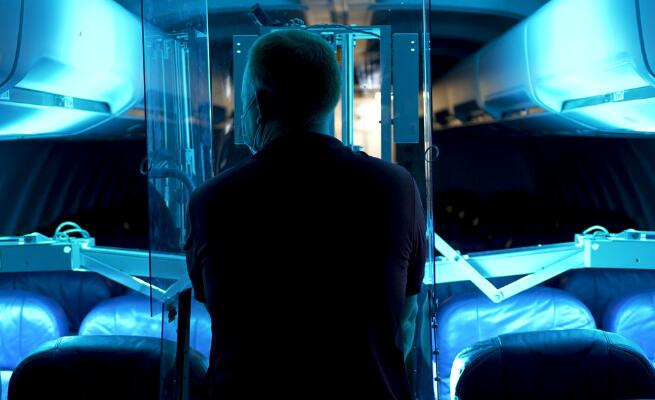
While the lights still keep a small percentage of the virus alive, Guzzo referred to the "Swiss cheese model" of defense against COVID. Every strategy to combat the spread has its loopholes, but each layer is another opportunity to stop stray virus particles.
Repeated exposure to UV light is the key to catching these missing particles -- luckily, it's as easy as flipping a switch. Replacing a light bulb is also simpler than changing an air filtration system. Guzzo noted that UV-LED lamps are inexpensive, can be easily retrofitted into existing fixtures, and the bulbs have a long lifespan and are simple to maintain.
These lights also benefit from automation. Standardized doses of germicide can be delivered every time, and the process of wiping down space with disinfectant has the potential for human error. Chemicals and waste from these disinfectants also end up in watersheds and landfills as a result of washing hands and throwing away rags.
But lights aren't harmless, and there's a reason for sunscreen and sunglasses -- UV radiation damages nucleic acids, and repeated, prolonged exposure is harmful. That's why Guzzo says these lights should be used when public spaces are empty, such as when vacant buses have completed their routes, or when no elevators are being used. The handrails of escalators can be continuously sanitized by placing UV lamps in the underground section of the track and cleaning them on every rotation.
Safe Antivirus Technologies, a Toronto-based start-up that is conducting research in collaboration with Guzzo, is developing unique UV-LED lighting modules. With motion sensors, the lights automatically switch to UV light when no one is in the room, then switch back to normal light when there is movement.
The study, published in the Journal of Virology, highlights UV-LED lights as a tool that could be used after a pandemic, ideally to help prevent another.


