


The growing popularity of LED lighting, especially blue light, is making Earth's nights brighter, new research finds. The pervasive penetration of light pollution into the dark is not good news for all kinds of creatures, including humans.
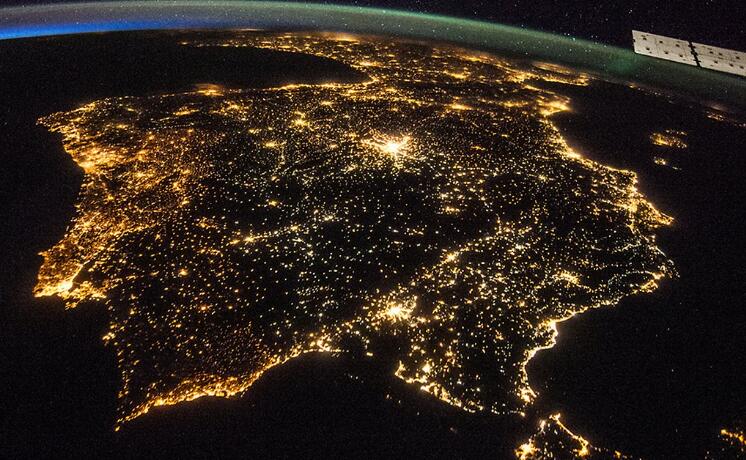
The Guardian reported that scientists conducted satellite observations in October for five consecutive years and found that from 2012 to 2016, the area of outdoor artificial lighting on the earth increased by 2% every year, and the brightness at night was also the same.
Actual light pollution is worse LEDs do not reduce overall lighting
The actual level of light pollution goes beyond that, according to the German-led research team, because the sensors used cannot detect some of the LED lighting, especially blue light. Nighttime lighting levels were stable in the US, the Netherlands, Spain, and Italy. However, lead author Christopher Kyba of the German Centre for Geosciences, GFZ, points out that when blue light is included, light pollution in these countries must also be increasing.
Light pollution is spreading inland, and overall usage is also increasing. This finding shakes up the notion that energy-efficient lighting can reduce global lighting use-or at least national use.
"To be honest, I used to think and hope that LEDs are the beginning of a change. But in fact, our awareness of light pollution is far from enough." Keba told reporters from Potsdam by phone.
Outdoor artificial light surge disrupts the biological clock
The researchers noted that the artificial light surge also had significant biological effects.
People's sleep can be compromised, which in turn affects health. Migration and reproduction of birds, fish, amphibians, insects and bats could be disrupted. Plant growth periods may be abnormally prolonged. If the light pollution trend continues to increase, don't even think about looking at the stars or the Milky Way in the future.
The only places where nighttime light dropped sharply, the researchers found, were in conflict zones such as Syria and Yemen. There was also a noticeable decline in Australia, but that was because of the frequent wildfires in Australia at the beginning of the study, and the researchers' inability to filter out the light caused by the burning.
Artificial night lighting has surged in much of Asia, Africa and South America.
Affects not only electricity bills, effective lighting is more important
Scientists say outdoor lighting is being installed in more and more places because of lower costs and increased community wealth. Urban sprawl also spreads artificial lighting. Keba said suburban lighting in major cities in developing countries has increased rapidly.
Other particularly bright spots include the Netherlands' expanding greenhouses and intensive agricultural areas.
Another author, Franck Holker, a scholar at the Leibniz Institute for Freshwater Ecology and Inland Fisheries in Berlin, warned that many people use lights at night without considering the real cost. Not just electricity costs, but also ecological and environmental costs.
Kerba and colleagues recommend avoiding bulbs that are too bright, known as white LEDs, as much as possible, opting for amber tints, and a more efficient method of illuminating places like parking lots or city streets. For example, slightly dim but dense lights tend to provide more effective illumination than diffuse but super bright lights.


