


Plant lighting refers to the use of LED plant lighting to promote plant growth. Plant lighting generally uses LED plant growth lights, which are artificial light sources that use LEDs (light emitting diodes) as illuminants to meet the lighting conditions required for plant photosynthesis. LED plant growth lights have great benefits for the growth of plants. They can promote strong roots and growth, and can also adjust the flowering period and flower color, promote fruit ripening and coloring, and improve the taste and quality of fruits.
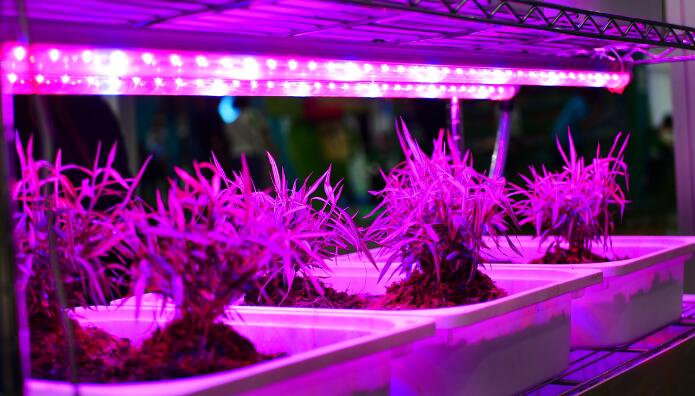
LED as supplementary lighting for plant photosynthesis Traditional artificial light sources generate too much heat, such as LED supplementary lighting and hydroponic systems, air can be recycled, excess heat and water can be removed, and electricity can be efficiently Converted into effective photosynthetic radiation, and ultimately into plant matter. Studies have shown that the growth rate and photosynthetic rate of lettuce are increased by more than 20% by using LED lighting, and it is feasible to use LEDs in plant factories.
LEDs as Induced Lighting for Plant Photoperiod, Photomorphogenesis Specific wavelengths of LEDs can affect the flowering time, quality, and duration of flowering in plants. Certain wavelengths of LEDs can increase the number of flower buds and flowering of plants; certain wavelengths of LEDs can reduce the flower formation response, and regulate the length of the pedicel and the flowering period, which is conducive to the production and marketing of cut flowers. It can be seen that the flowering and subsequent growth of plants can be regulated by LED regulation.
After application testing, the grow light is very suitable for the growth, flowering, and fruiting of plants. Generally, indoor plants and flowers will grow worse and worse over time due to the lack of natural light. By using plant lights with the required spectrum of plants, it can not only promote their growth but also prolong the flowering period and improve the quality of flowers. The application of this high-efficiency light source system to agricultural production such as greenhouses and greenhouses can, on the one hand, solve the drawbacks of the lack of sunlight leading to the decrease in the taste of greenhouse vegetables such as tomatoes and cucumbers. It will be listed before and after the Spring Festival, so as to achieve the purpose of off-season cultivation.


