


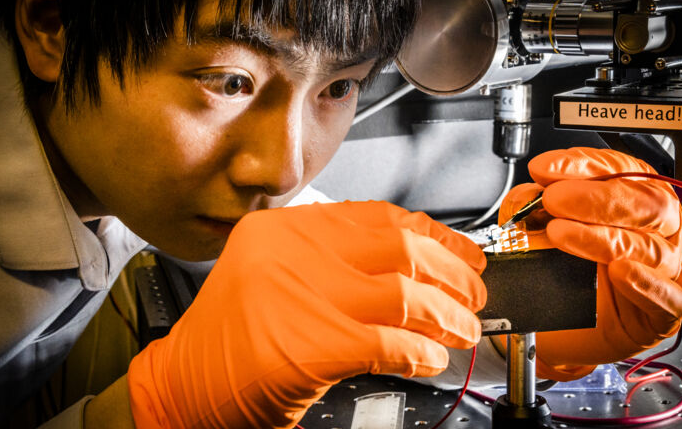
Researchers led by the University of Cambridge in the United Kingdom and the Technical University of Munich in Germany found that the use of doping technology to recombine charge carriers in a specific part of the material's crystal structure and recombine and emit light can increase the luminescence of halide perovskite materials by 3 times. It has the potential to become low-cost and printable flexible LED lighting materials, smart phone displays, low-cost lasers, etc. The results were published in the Journal of the American Chemical Society.
This new type of semiconductor material is a halide perovskite in the form of nanocrystals, which is only one-thousandth of the thickness of a human hair and is a highly luminescent material. The researchers tried to exchange lead with manganese ions, and the luminescence of quantum dots increased by a factor of two. In the next step, researchers hope to determine more effective dopants, so that the technology can be used in a wider range of applications.


