


This article introduces a way to indirectly determine the junction temperature quantitatively.
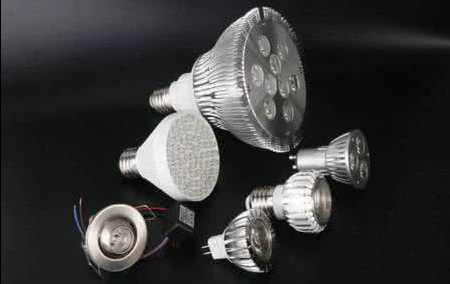
"Half-Hour Illumination Method" to measure the junction temperature
Since we cannot directly measure the junction temperature, is there an indirect way to know the junction temperature? Fortunately, as the general LED junction temperature increases, the luminous flux will decrease. Then, as long as we measure the illuminance change of the lamp at the same position, we can inversely deduce the change in junction temperature.
The specific approach is:
1. Choose a place free from external light interference, preferably at night, and turn off other lights.
2. Turn on the light in the cold state, measure the illuminance of a location immediately, and record the reading as "cold illuminance" at this time.
3. Keep the position of the lamp and illuminance meter unchanged, and the lamp will continue to work.
4. After half an hour, read the illuminance value here again, and write down the reading as "hot illuminance".
5. If the two values are similar (10~15%), the heat dissipation system of this lamp is basically good.
6. If the two values are very different (greater than 20%), the heat dissipation system of this lamp is questionable.
Does the general designer or contractor have an illuminance meter what not yet? Hurry up and buy one, it's not expensive, you can use it for more than 100 yuan!
Is it just reasonable for the specific illuminance to decrease by what percentage? This depends on the specifications and performance of the specific LED chip, and it is impossible to simply specify the range ratio.
The scope of application of the "half-hour illuminance method"
Let's list the "luminous flux vs junction temperature" curve of several commonly used chips. From this curve, we can see how much lumens the luminous flux drops, and you can indirectly know how many degrees Celsius the junction temperature has risen.


