


Graphene has a wide range of applications in high-power LED lighting due to its excellent electrical and thermal conductivity. Graphene currently has three main application directions, using its conductive properties to make transparent electrodes or for transparent conductive layers near electrodes, using its thermal conductivity to prepare thermally conductive films, and coating the substrate and the substrate with a heat-conducting heat-dissipating graphene coating. In addition, there have been many studies on the use of graphene as a light-emitting layer material, as a lamp housing, as a transparent packaging material, and as a current diffusion layer.
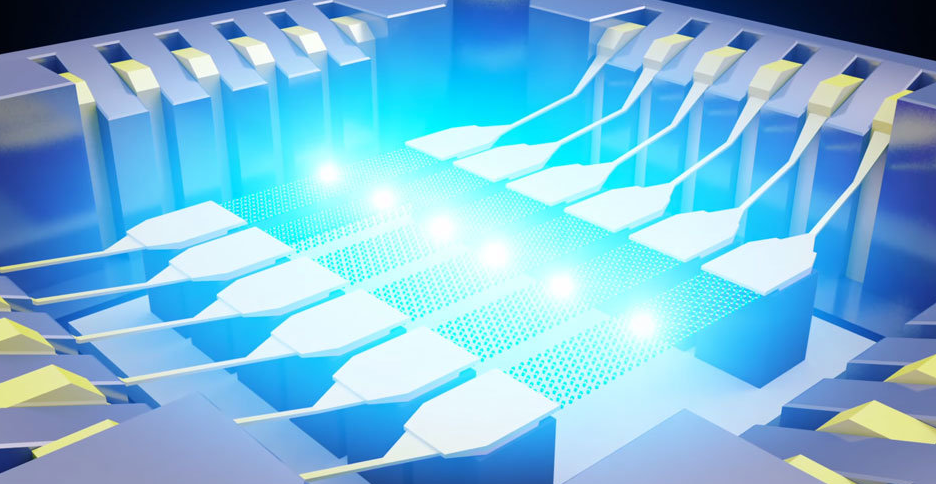
In the field of electrical conduction, in recent years, gallium nitride-based light-emitting diodes (LEDs) have developed rapidly. In GaN-based LEDs, indium tin oxide (IOT) has become a transparent conductive in LED production process due to its high electrical conductivity and high light transmittance. The main material of the film. In April 2015, the Graphene Institute of the University of Manchester in the United Kingdom developed a new graphene bulb with a filament-shaped LED light source inside. The outside of the LED source is coated with graphene, which utilizes the conductivity of graphene to make the bulb. It takes longer to use and reduces energy consumption. The new graphene bulbs are still based on LED technology, which greatly enhances their performance and longevity through the magic of graphene molecules, and is expected to be cheaper than traditional LED bulbs.
In the field of luminescence, in July 2015, Ren Tianling, a professor of micro-nanoelectronics at Tsinghua University, used two-form graphene to create a new luminescent material, which was first demonstrated in a graphene-based luminescence system. An LED can adjust the light of different colors, covering almost all colors of the entire visible spectrum.
In the field of lighting and heat dissipation, photoelectric conversion is realized by semiconductor chips in LED illumination. In order to maximize the conversion of electrical energy into light energy instead of thermal energy, and to improve the luminous efficiency of LED illumination, it is necessary to solve the heat dissipation problem of the semiconductor chip, and graphene The heat dissipation capability is very good, and the thermal conductivity of the single-layer graphene film reaches 5.3 kW·(m·K)-1, which is much higher than the traditional technical materials, and is an effective means for solving the problem of heat dissipation of the LED illumination.
Minghao (Beijing) Electronic Technology Co., Ltd. is a pioneer and a pioneer in the application of graphene heat dissipation in the field of LED lighting. Based on the integration of industry, university and research institutes established by the Beijing Institute of Technology and Zhejiang University, it has strong new material research and development capabilities. Three kinds of graphene heat-conducting and heat-dissipating composite materials with reversible liquid crystal phase change characteristics (RLCP) have been developed, which are graphene in-situ solidified thermal silica gel, graphene composite solid-liquid phase change material and graphene composite heat-dissipating reinforced coating. Solve three key problems in heat dissipation: heat conduction, temperature uniformity, and heat transfer. Applying it to the heat sink structure of high-power LED lighting, the effective control of the junction temperature of the chip and the miniaturization of the heat sink are realized. On this basis, a series of LED lighting products have been developed, such as graphene cooling LED lighting module, graphene cooling LED lighting tube, graphene cooling mining lamp, graphene cooling LED tunnel lamp, graphene cooling LED car front Lamps and so on, especially the creative design of graphene heat-dissipating LED street lamp tube structure, subvert the traditional mode of LED street lamp industry, replacing the replacement method of the original lamp street lamp to replace the whole lamp head of sodium lamp. Through the standardized structural design, the plug-and-play replacement method can be realized without replacing the sodium lamp housing, and the labor cost and equipment cost are greatly reduced. It is expected to become the new development direction of LED street light standards.
In addition to Minghao Technology, the Philips MASTER LED MR16 is the world's first high-power LED application. Its aluminum casing has been replaced by Stanyl TC thermal plastic developed by DSM, which not only achieves the same level of heat dissipation. Purpose and the entire luminaire is lighter and more resistant to corrosion. The thermal conductivity of graphene thermal plastics can be increased from 0.2W/mK for ordinary plastics to 5-15W/mK and is resistant to corrosion.
Blue Stone has developed high-power LED products using graphene thermal plastics and has demonstrated excellent heat dissipation. On the other hand, the heat dissipation performance of the heat-dissipating film made of graphene is much better than that of the graphite sheet, and the measured thermal conductivity can reach above 1000 W/mK, and the film has good flexibility and is easy to process.
The cooling module for LED lamps developed by Xiamen Taiqi Lifei Electronic Technology Co., Ltd. uses a thermally conductive polymer material mixed graphene material to form a module to replace the existing aluminum heat dissipation module, and the practical use has a limited improvement in thermal conductivity. Currently only available in low power (less than 30W) lighting radiators.
Shandong Jingtaixing Optoelectronics Technology Co., Ltd. uses graphene on the metal substrate at the back of the filament. The heat generated by LED heating radiates heat through the graphene, and uses the heat conduction gas inside the shell to achieve effective convection and reduce the temperature. According to the comparison between the graphene coated and uncoated graphene products, it can be seen that the junction temperature of the graphene-coated chip is 3-5 degrees lower than the junction temperature of the uncoated graphene, which does not contribute to the extension of the filament life.
The 2016 Global Graphene Industry Research Report released by China Graphene Industry Technology Innovation Alliance pointed out that in the next 3-5 years, graphene thermal conductive film and graphene heating film will be rapidly commercialized; in the next 5-7 years, there will be New and practical graphene thermal conductive plastics and graphene thermal conductive coatings are used in production and life; in the next 7-10 years, there will be lighter and embedable graphene thermal conductive chips, which will improve heat dissipation efficiency. China leads global development in this industry, and the market size will be multiplied by the annual growth rate of 200-300%.
The 2016-2021 China Graphene Industry Research and Analysis and Market Forecast Report released by the China Industrial Research Institute predict the market scale of LED application of graphene thermal conductive film from 2016 to 2020. By 2020, the market scale of the LED thermal conductive film can be It reached 1.25 billion.


