


Due to the impact of excess capacity in China, the market leader Philips LED margins will be reduced. With the expansion of economies of scale, product price advantage no longer exists. Greatly affect the overall competitive pressure in the market. To this end, Philips will sell its lighting business. It is reported that the Dutch electronics group Philips has attracted a number of private equity groups bidding major part of its business lighting devices, once highly profitable to sell.
Taiwanese LED manufacturer Epistar being developed 200mm technology. Philips, Osram and Samsung are actively exploring silicon GaN technology. Changes in the market for a new competitor to enter the market to provide a starting point. They created great opportunities for other market participants, in order to rapidly increase market share. As suppliers continue to shift to the upstream industry chain, market share is expected to change, the return on investment will increase.
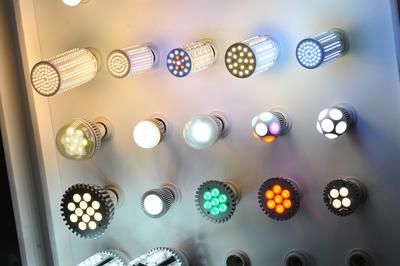
Therefore, suppliers will provide more LED lights. They hope in this way to control the profits. Based on product performance and luminous efficiency, light quality, increase lumen output, reliability, etc., will take place between the LED lighting supplier competition. Product cost and product quality will always be within an acceptable range the focus of competition.
In addition, LED suppliers continue to seek low-cost, high-quality LED lighting products. The sale requires extensive range of products. Therefore, with a wide product range of suppliers have access to strong retail channels. OEM channel strategy is further influenced by the relationship. Differentiated product design methods, know-how and a deep understanding of lighting applications will help to improve the supplier in the LED lighting market competitiveness.


